

En temps normal, on trouve Ebert Pynaert – responsable technique de compte – derrière son ordinateur portable ou en déplacement chez des clients. Sauf ce jour-là, où il a troqué ses tâches habituelles contre une journée entière passée dans l'atelier d'Oudegem, chez cas23, pour le compte de The Switch. Ce qu'il y a appris va bien au-delà des machines et des mesures.
 Jul 13, 2026
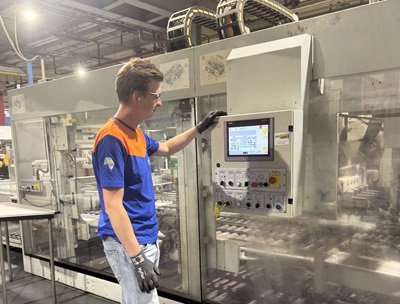
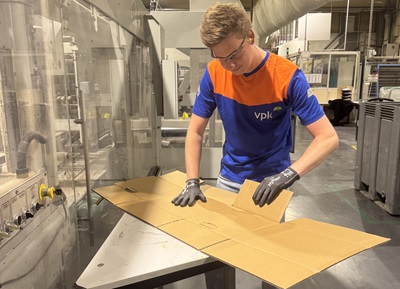
« Lors de la préparation d’une commande, bien plus de facteurs entrent en jeu qu’on ne le pense à première vue. Par exemple, il est parfois préférable de placer moins de cartons sur un gabarit de découpe. Cela n’a pas grand-chose à voir avec des raisons de conception, mais plutôt avec le fait que, sinon, cela représenterait une charge trop importante pour le robot d’empilage.
J’ai également pu examiner en détail des aspects techniques tels que le gabarit de découpe et les lames. Des éléments auxquels je n’avais pas vraiment prêté attention auparavant, mais qui ont un impact direct sur le bon déroulement d’une commande. »
« Oui, et pas qu’un peu (rires). Quand on comprend vraiment l’impact de la production, on peut étayer ses explications de manière beaucoup plus solide et s’adresser aux clients avec davantage d’assurance. Ce que j’ai appris ce jour-là ne se trouve pas dans un manuel. On ne comprend vraiment comment quelque chose fonctionne que lorsqu’on l’a vu de près. »
« Sans aucun doute ! Pour les collègues ayant plus d’expérience chez VPK, une journée comme celle-ci est extrêmement précieuse, car elle permet de comprendre les processus de près. Pour ceux qui ne sont pas là depuis très longtemps, le programme « Switch » se limite à l’observation, mais même cela peut être très utile. »


